Sometimes You Just Need a Tap
How years on the road led me to build VanTopUps and why the infrastructure we need might already be all around us
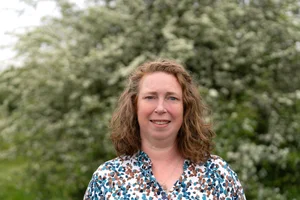
Guest post by Alan founder of VanTopUps
Before I fitted a water tank, my routine went something like this. Buy five litres from Sainsbury's. Or find a garage, go in, and ask whether they'd mind me filling a bottle from their tap. Then, because asking made me feel like I was imposing, buy some milk and a packet of biscuits I didn't need. A guilt tax on about two pence worth of water.
I've been full-time in a van for five years and I've never once booked a campsite. That's not a boast, it's just how I live. But it does mean the ordinary things - water, power, somewhere to put waste - are things I've had to build a routine around rather than assume. I've done a couple of work exchanges over the years mainly for access to basic facilities. And of all of it, water is the bugbear. Ask most full-timers and they'll say the same.
All that faffing about, and all those plastic bottles, for something that comes out of a tap.
That feeling of being surrounded by taps, none of them mine is where VanTopUps started.
The problem isn't that the water doesn't exist
When people picture traveling in a campervan or motorhome, they tend to picture the difficult bit as finding somewhere beautiful to stop. In my experience that's rarely the hard part. The hard part is water and getting rid of waste responsibly. Washing clothes. Finding a shower, or a tool, or someone who knows the area well enough to tell you where there isn’t a height barrier.
If you live in a house and you need water, you turn on a tap. If you need power, you plug something in. On the road, none of that is automatically there.
But look around almost anywhere in Britain and the infrastructure already exists. Houses with mains water. Farms with taps. Garages, workshops, businesses, campsites. The resource is there but what is missing is any way of knowing which of those taps belongs to someone who'd be happy to help.
That's the gap. And it's a different gap from the one campsite directories and park-up apps fill. Those are brilliant at answering where can I stay tonight? VanTopUps is for the moment when you already know where you're stopping, and you just need twenty litres of fresh water.
Sometimes you don't need a campsite. You just need a tap.
Why "TopUps"
A TopUp is meant to be small. You top up your water, top up your batteries, get a shower or a wash load or twenty minutes of decent Wi-Fi. Somewhere to dispose of waste properly. A tool for a five-minute repair. A bit of local knowledge.
It doesn't have to be a big transaction, and it usually isn't. A very small amount of help solves a very real problem.
So instead of listing places, we list what's actually on offer: fresh water, power and charging, waste and recycling, showers, laundry, Wi-Fi, tools, workspace, practical help, local knowledge. You search for the thing you actually need or the thing you can sometimes offer.
There's an imbalance here that I find genuinely interesting. If someone lets me take forty litres from their outside tap, it might cost them pennies. If I'm nearly empty and the next fill-up I know about is thirty miles the wrong way, that tap is worth a great deal to me. The same is true of a borrowed tool that keeps a journey going, or an hour of power, or someone telling you which lane not to take.
Big communities don't have to be built from big contributions. It’s the small actions that make it big.
Testing whether anyone would actually help
VanTopUps began as a Facebook group in October 2025, and I set it up to answer one question. Not whether people liked the name. Whether anyone would say yes.
Would a homeowner really let a stranger in a van fill a container from their outside tap? Would a farm? Would a workshop lend a tool? You can have an idea that makes complete sense inside your own head and still be wrong about whether anyone else sees it.
The answer was yes! The group is now 2,660 people, and hosts came as readily as vanlifers including plenty who'd never owned a campervan in their lives and simply had a tap.
But the thing I genuinely hadn't predicted is that around one in five members are both. They have a van, they go away when they can, and when they're home they're happy to help someone else out. One member in East Sussex put it about as plainly as it can be put: "I have a camper and love to get away as often as possible but also happy to help others while at home."
That changed how I think about the whole thing. I'd assumed two groups; people who need, and people who give. In practice a good percentage of the network is the same people doing both, depending on which week you catch them in. Which makes a lot of sense, really. Anyone who's been caught short on water knows exactly what it's worth to the person at the door.
That's the version of the idea I've learned to lead with. "Building vanlife infrastructure" sounds enormous and complicated. "Would you occasionally let someone fill a water container from your outside tap?" is a question anyone can answer. Nobody's being asked to become a campsite.
Hosts stay in control, and here's how
This is the part I most want to be clear about, because it's where trust either works or it doesn't.
A host decides what they offer, when they offer it, and whether they're available at all. One person offers only water. Another offers a charging point. Someone else has tools, or a driveway, or is simply happy to answer questions about the area. Nobody has to offer everything, and letting a vanlifer fill a water tank doesn't turn a home into a campsite.
The phrase I keep coming back to is access with permission. If someone offers water, that doesn't mean you can turn up whenever you like. If a host has somewhere a vehicle can pull in, that place hasn't become public. There's a real person on both sides of the platform helps them find each other, but the actual arrangement still happens by agreement.
You can't build a network involving private homes and then treat those homes as anonymous public infrastructure. So there are two things built in from the start.
The map pin never points directly at a property. It shows you roughly where a TopUp is, close enough to know whether it's worth asking, not close enough to turn up unannounced at somebody's door.
And you can't simply arrive. Any request goes through the platform first, so the host is the one who decides whether the conversation happens at all, and when. Nobody's address is handed out because somebody once ticked a box saying they had a tap.
That's deliberately a bit of friction. It would be easier to drop exact pins on a map and let people get on with it, but that would turn a favour into an expectation and the moment it becomes an expectation, hosts stop offering.
Existing infrastructure, willing people, and a way to connect them
Underneath all of this is a simple idea I've started calling the Social-Infrastructure Model.
We already have water, electricity, tools, washing machines, workshops and Wi-Fi. Almost all of it sits behind the boundary of a home, a farm or a business. I don't need to install thousands of water points across Britain there are already millions of taps. What's missing is only the connecting layer: existing infrastructure, willing people, and a way for them to find each other.
Put those three together and you start to build infrastructure without building anything.
One tap in one town is a nice gesture. Ten thousand taps spread across the country is something else. No single host carries the network; each contributes the small part they're comfortable with, and the value comes from density. One host in an area is useful. A hundred creates genuine coverage.
None of that logic is particularly British, either. A van in France still needs water. A farm in Germany still has a tap. Different countries do things differently, but the basic exchange doesn't change.
Businesses fit too - and it doesn't all have to be free
Plenty of businesses already have exactly what someone on the road needs. A workshop has tools and power. A conversion company has water, electricity and workspace. A garage has equipment and expertise. A farm has water and space.
VanTopUps gives them another way to make that available, and yes, some visibility among campervan and motorhome owners. What I don't want is a directory full of adverts pretending to be useful. If a business lists a TopUp, it should actually provide it.
Charging is fine. Expecting everything to be free wouldn't be realistic. Some homeowners give water away, some ask for a couple of pounds, some take a donation to a charity instead. A business may need to charge properly. The only thing that matters is that people know what's offered and on what basis before they arrive.
Not everyone in a van is on holiday
Vanlife covers far more ground than the photographs suggest. Weekend trips and six-week tours. People who've chosen it full-time for the freedom. People working remotely. And people living in vehicles because their circumstances changed or housing became impossible.
Whatever the reason someone is in a van, the practical needs don't change. The retired couple touring for six weeks need water. So does the person who's chosen this life. So does someone whose situation is much harder than either.
I'm not claiming VanTopUps solves any wider social problem - it can't. What it might do is take some friction out of the everyday difficulties, particularly in the places where vans concentrate and facilities don't.
What success actually looks like
The website launched on 3rd August 2026. Before that, Caravan Radio gave me the first proper chance to explain the idea rather than just describe the group, and in June 2026 BBC Radio Devon put it in front of an audience I could never have reached otherwise. People who'd never been in a campervan in their lives, but who understand an outside tap perfectly well.
Right now the main coverage for hosts is in the South West.
Success is somebody having a problem and finding a solution. If you're low on water, open VanTopUps and find a host nearby - it's worked. If you need a tool for a quick repair and there's a workshop willing to help - it's worked. Scale just makes those moments more likely.
We tend to assume infrastructure has to be built from scratch. Sometimes it's already all around us, and what's missing is simply a way to share access to it.
If you're on the road: browse hosts and TopUps at vantopups.com
If you've got a tap, a socket, a tool or some local knowledge: you can list a single TopUp in under 5 minutes at vantopups.com. You choose what you offer, when, and whether you charge.
Join the conversation: the VanTopUps Facebook group
Alan founded VanTopUps after 5 years living and travelling in a campervan. He was interviewed about the project by BBC Radio Devon in June 2026.